
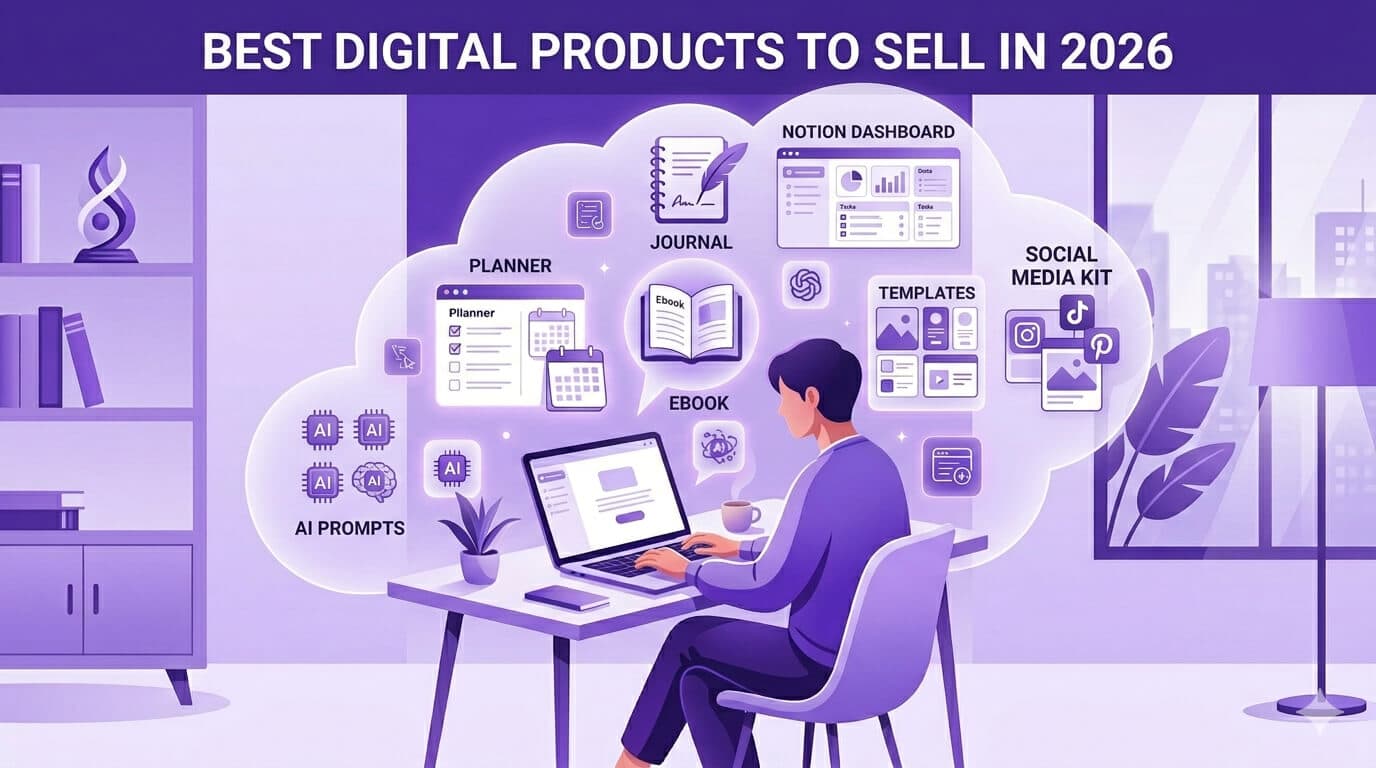
What Most Creators Don’t Tell You About Digital Products
Making money online with digital products sounds simple. You create something once and sell it again and again.
That’s why so many YouTube creators are talking about it. But after going through all the videos and courses, one thing became very clear:
Most people are making it more complicated than it needs to be. Here’s what we found. Many creators start with digital products. But then push you into:
Expensive coaching
Dropshipping
Complex “AI systems”
Instead of showing simple ways to make money
This creates a problem for beginners:
Too much confusion
Too many models
No clear starting point
What This Article Will Help You Do
This is NOT another “top 10 ideas” post. This will show you:
Which digital products are actually working
Which creators are worth listening to
Which tools you should use
Which courses are useful (and which are not)
How YOU can start making money with them
Simple. Practical. No hype.
What Most Creators Get Wrong About Digital Products
After reviewing all the creators, one pattern stood out. Most creators are NOT really teaching digital products properly. Here’s what they are actually doing:
1. Selling High-Ticket Coaching Instead
Many creators talk about digital products…
But their real goal is:
Selling $1,000 – $10,000 programs
Pushing you into coaching funnels
Examples:
 Tanner Chidester (Elite CEOs)
 Richard Yu (Impact Clients)
2. Shifting Into  Dropshipping or E-commerce
Some creators start with digital products…
But quickly move into:
Dropshipping
Ecommerce automation
“AI stores”
Example:
3. Making It Look Too Easy
You’ll often hear:
“Make $10k/month”
“Passive income”
“No work needed”
Reality:
It takes effort
It takes testing
It takes time
Why This Matters for You: Freedom Seeker Insight
If your goal is Make money online with freedom. Then you need:
Simple systems
Low-cost start
Clear steps
No unnecessary complexity
But most creators are not teaching that.
The Real Opportunity
This is where things get interesting. There is a BIG gap in the market:
People want simple digital products
But creators are pushing complex systems
What Actually Works
Instead of following hype, focus on:
Simple
Sell Digital ProductsSolving one real problem
Using basic tools (not 20 different apps)
 Gumroad
Final Insight
The real opportunity is NOT in copying every creator. It is in building simple, useful digital products that people actually need.
Best Digital Products to Sell Real Breakdown from Creator Research
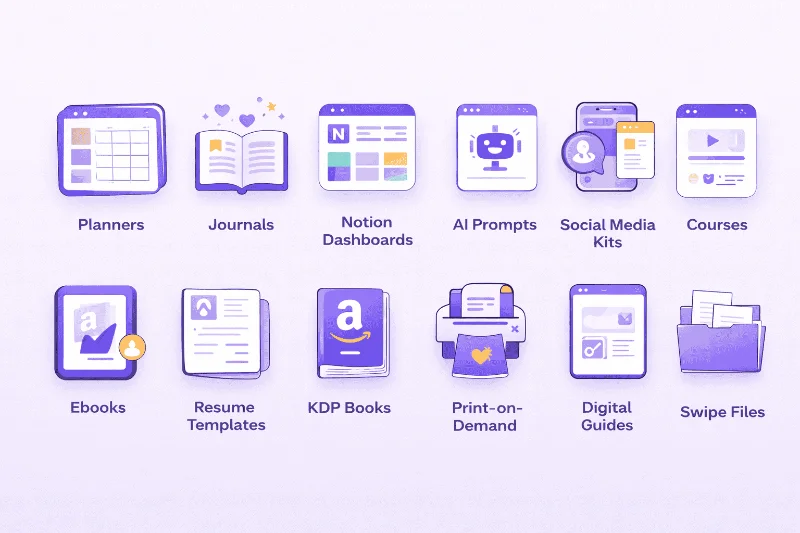
After analyzing creator's videos on youtube, one thing became very clear: Creators are not just talking about a few ideas. They are mentioning many different digital products.
Key Insight
Most creators present these as different ideas, but many of them follow similar business models. That means:
You don’t need to try everything
You need to pick ONE and execute properly
Planners
What it is
Digital planners for:
Daily tasks
Fitness
Budgeting
How Creators Are Actually Making Money with Planners
Creators like are not just selling simple planners they are building niche-focused products that solve specific problems.
 Luna Vega focuses on Etsy-based digital products and shows how planners can rank using the right keywords and simple Canva designs. Her approach is beginner-friendly and proves that you don’t need complex tools to start selling.
 Alek Sheffy takes it further by combining planners with Print-on-demand and store systems. He shows how one planner idea can be turned into multiple products and even scaled into a full Etsy business.
 Yale Jeannette focuses on simplicity and consistency. She shares how creating clean, easy-to-use planners and posting content around them can bring steady sales, even without a large audience.
How you make money
Most people think you just upload a planner and wait. That’s wrong. Here’s what actually works:
Create planners for a specific problem
Example: “ADHD Daily Planner”
Example: “Weight Loss Tracker”
List on
 Etsy with search keywords
People search → your product shows → you get sales
Instead of selling 1 planner. Create a bundle of planners
Example:
Daily planner
Weekly planner
Habit tracker
Sell all together for higher price. More value = more sales
Where to sell
 Shopify
 creativemarket
Journals
What it is
Guided journals like:
Gratitude journals
Mental health journals
How Creators Are Actually Making Money with Journals
Creators approach journals in very different but powerful ways.
 Thomas Frank focuses on structured thinking and productivity. His style shows that journals work best when they are not just blank pages, but guided systems that help users think, plan and improve daily habits.
 Easlo takes a minimalist approach, turning simple journaling ideas into clean, high value digital systems. His work proves that users prefer journals that are easy to use and designed with clarity.
- Luna Vega and Yale Jeannette focus on Etsy-based journals, especially in niches like mental health, self-growth, and productivity. They show how simple Canva based journals can generate consistent income when paired with the right keywords and audience targeting.
How you make money
Journals sell when they connect with emotion.
Mental health
Productivity
Self-improvement
People buy because they feel something. Add “guided prompts” inside your journal Example:
Not just “write your thoughts”. Add questions like:
What made you stressed today?
What can you improve tomorrow?
This increases value instantly
Where to sell
 Amazon Kindle Direct Publishing (KDP)
 payhip
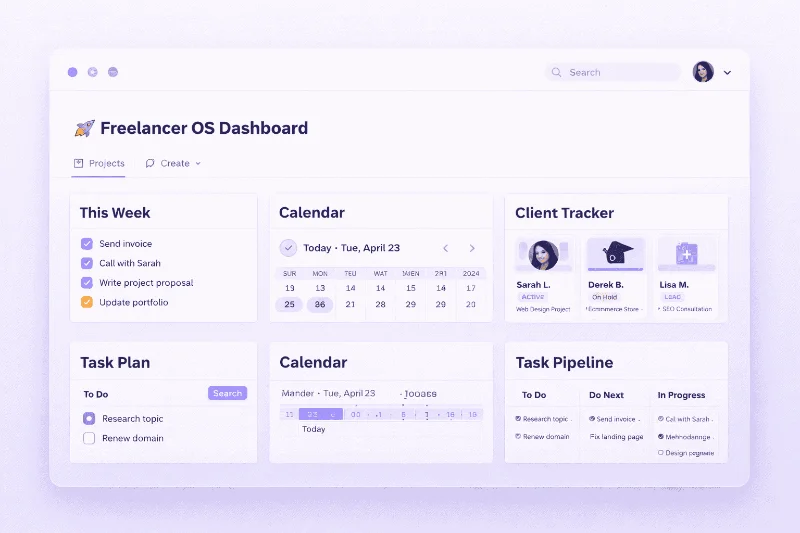
Notion Dashboards
What it is
All-in-one systems for:
Productivity
Business tracking
Study planning
How Creators Are Actually Making Money with Notion Dashboards
Creators have turned simple Notion setups into high value digital products by focusing on systems, not just templates.
 Ali Abdaal builds productivity and creator focused systems. His approach shows that people are willing to pay for ready made workflows that help them manage content, tasks and business in one place.
- Thomas Frank focuses on detailed, structured dashboards that solve real problems like task management and organization. His work proves that well-built systems can replace multiple tools, which increases their value.
- Easlo keeps things simple and clean. He creates minimalist Notion dashboards that are easy to use, showing that clarity and usability matter more than complexity.
How you make money
Notion templates sell when they save time.
- Freelancer need client trackers
Students need study systems
Turn your template into a “system”. Instead of Selling Notion Templates Sell it as:
“Freelancer Business System”
“Student Productivity System”
People pay more for systems than templates
Where to sell
AI Prompts
What it is
Ready-to-use prompts for:
AI tools
 chatgpt
How Creators Are Actually Making Money with AI Prompts
Creators are using AI prompts in different ways, but the key idea is the same. They are not selling prompts they are selling results.
 Nathan Nazareth focuses on automation and AI workflows. His content shows how prompts can be used to speed up business tasks, but it also highlights that generic prompts don’t work they need to be tied to a real outcome.
- Richard Yu uses prompts inside sales and marketing systems. He focuses on things like lead generation and client acquisition, proving that prompts that help users make money like getting clients or writing sales messages have much higher value.
- Luna Vega takes a more beginner friendly approach. She shows how AI prompts can help create digital products faster, especially for Etsy, making it easier for beginners to build and launch products without overthinking the process.
How you make money
AI prompts sell when they produce results. Not “100 ChatGPT prompts. But:
“Get Clients Using ChatGPT Prompts”
“Etsy Listing Optimization Prompts”
Show BEFORE and AFTER results. Example:
Bad output → Good output
This builds trust and increases conversions
Where to sell
Prompt marketplaces like
 PromptBase
Personal website
Resume Templates
What it is
Editable resume designs
How Creators Are Actually Making Money with Resume Templates
Creators in the Canva template space and Etsy Seller are turning simple resume designs into high demand digital products by focusing on results, not just design.
Canva template sellers create clean, modern and easy-to-edit resumes that anyone can customize in minutes. Their success comes from making resumes that are simple to use and visually strong, especially for people who don’t have design skills.
Etsy creators take this further by targeting specific audiences like students, job seekers, or professionals in certain industries. They show that resumes sell best when they are positioned for a clear purpose, not as generic templates.
What You Can Learn From Them
If you want to make money with resume templates don’t just sell a design, help users get hired. Create resumes for specific industries or roles. Bundle your product with:
Cover letter templates
Resume writing tips
Example resumes
Keep the design clean and easy to edit in
 canva
canva
Where to sell
Social Media Kits
What it is
Bundles like:
 instagram posts
Story templates
Branding kits
Creators That Are Actually Making Money with Social Media Kits
- Alek Sheffy builds on this by turning social media kits into part of a larger product ecosystem. He combines templates with Print-on-demand and store strategies, showing that one set of templates can be repurposed and scaled into multiple income streams.
How you make money
These sell best when targeted. Not Social media templates. But:
Instagram templates for coaches
Real estat content kit
Add content ideas inside your kit. Example:
30 post ideas
Captions
Now you are not selling templates. You are selling content system
Where to sell
Courses
What it is
Training programs teaching skills
How Creators Are Actually Making Money with Courses
Creators like Tanner Chidester and Richard Yu are not just selling courses — they are building high-ticket education and coaching businesses around digital products.
- Tanner Chidester focuses on helping people package their knowledge into high-value programs. His approach shows that courses make the most money when they are positioned as premium solutions with clear outcomes, not just recorded lessons.
- Richard Yu uses courses as part of a larger system that includes funnels, automation, and client acquisition. His model proves that courses alone don’t generate income they work best when combined with marketing and sales systems.
What You Can Learn From Them
If you want to make money with courses:
Don’t start with a course start with a small product first
Build trust and audience before selling high ticket offers
Focus on one clear outcome not too much information
Use courses as a way to scale your income, not start it
Where to sell
 Teachable
 Kajabi
 Thinkific
 Podia
PodiaEbooks
What it is
Digital books teaching:
Skills
Knowledge
Systems
Mentioned by
Self-publishing creators
How you make money
Ebooks work when they are:
Short
Specific
Actionable
Don’t write long books
Create:
“50-page actionable guide”
Example:
“How to start Etsy in 7 days”
Fast results = better sales
Where to sell
KDP Books
What it is
Publishing books on  Amazon
How Creators Are Actually Making Money with KDP Books
Creators focus on Amazon KDP as a scalable digital product model. Their approach is not about writing one book and hoping it sells it’s about building a system of multiple books that generate consistent income over time.
 Sean Dollwet teaches self-publishing with a strong focus on niche research, keyword targeting, and consistency. He shows that success on KDP comes from publishing multiple books in low competition niches, not chasing one viral idea.
How you make money
You earn per sale on Amazon. But real money comes from:
Volume
Multiple books
Focus on low competition niches
Example:
Kids activity books
Niche journals
Less competition = easier ranking
Where to sell
Print-on-Demand
What it is
Selling designs on:
T-shirts
Mugs
Products
How Creators Are Actually Making Money with Print-on-Demand
Creators use Print-on-demand (POD) as a way to turn simple ideas into physical products without holding inventory.
- Alek Sheffy focuses on building scalable Etsy stores where digital designs are used across multiple products like t-shirts, mugs, and planners. His approach shows that one design can be reused to create multiple income streams, making POD highly scalable.
- Luna Vega combines print-on-demand with digital products. She often starts with simple canva designs and shows how those same designs can be sold both as digital downloads and physical products, increasing overall earnings from a single idea.
What You Can Learn From Them
If you want to make money with print-on-demand:
Start with simple designs don’t overcomplicate
Focus on a specific niche like fitness, pets, mindset.
Use platforms like Etsy for built in traffic
Reuse one design across multiple products
Combine POD with digital products for double income
Where to sell
 redbubble
 Teespring
 printify
 Printful
Digital Guides
What it is
Step-by-step guides
Examples:
“How to start freelancing”
“How to grow on Etsy”
How you make money
Sell as PDF or bundle
Where to sell
Swipe Files
What it is
Ready-made:
Scripts
Templates
Copywriting examples
How Creators Are Actually Making Money with Swipe Files
Marketing-focused creators use swipe files as ready-to-use assets that help others get results faster.
Marketing creators build swipe files around real use cases like:
Cold DMs
Email outreach
Sales pages
Ad copy
- Richard Yu uses swipe files inside his sales and client acquisition systems. His approach shows that people are willing to pay for messages that help them get clients, close deals or make money, not just generic templates.
How you make money
Sell collections
Target business users
Sell outcome based swipe files. Example:
“Cold DM scripts that get replies”
“Client closing scripts”
People pay for results, not content
Where to sell
 Notion
Final Takeaway
After reviewing all these ideas. There are many product types. But most follow similar patterns and the real difference is execution.
What You Should Do
If you want to make money. Pick ONE product type. Focus on ONE niche. Solve ONE problem. You don’t need more ideas. You need to execute one idea properly.
Tools Creators Use to Build and Sell Digital Products
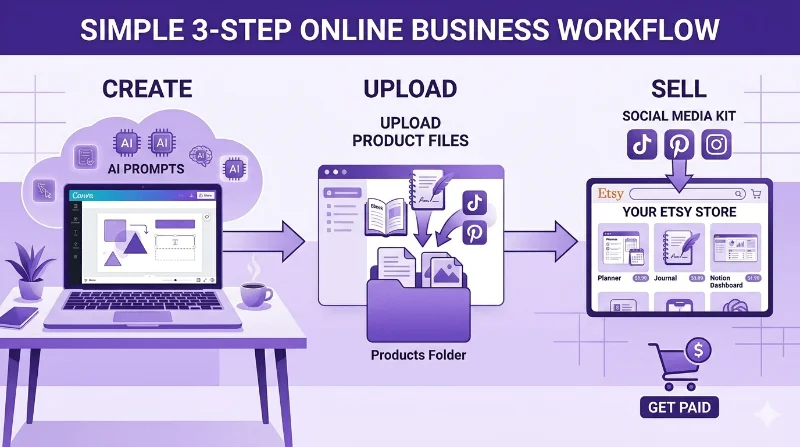
After analyzing all the videos, one thing is clear. You do NOT need many tools to start. Most creators are using the same few tools again and again. If you understand where each tool fits, you can build your entire digital product system with very low cost.
Key Insight
The tools are simple. The strategy is what makes the difference. Most beginners fail because:
They use too many tools
Or use the wrong tools at the wrong stage
1. Product Creation Tools
These tools help you create the digital product.
Used for:
Planners
Journals
Templates
PDFs
Mentioned by:
Why it’s important:
Very easy to use
No design skills needed
How you can make money with it:
Create simple digital products
Export as PDF
Sell on Etsy
Used for:
Productivity templates
Dashboards
Systems
Mentioned by:
Why it’s important:
Growing demand
High-value templates
How you can make money with it:
Build systems people need
Sell as templates
 Claude
Used for:
Writing content
Creating prompts
Generating ideas
Mentioned by:
Multiple AI creators
Why it’s important:
Speeds up creation
Helps beginners start faster
How you can make money with it:
Create prompt packs
Generate product ideas
Build faster products
2. Selling Platforms
These tools help you sell your digital products.
Used for:
Selling digital downloads
Printables
Templates
Mentioned by:
Why it’s important:
Built-in buyers
No audience needed
How you can make money with it:
Upload products
Use keywords
Get organic traffic
Used for:
Selling digital products
Notion templates
AI guides
Mentioned by:
Notion creators
Digital product sellers
Why it’s important:
Simple setup
Direct selling
How you can make money with it:
Sell directly to audience
Share links on social media
Used for:
Building your own store
Mentioned by:
Why it’s important:
Full control
Problem:
Requires more setup
Not beginner-friendly
3. Automation and AI Tools
These tools help you scale and automate your work.
AI Image Tools ( Midjourney /
  DALL-E 3)
Used for:
Creating designs
Product visuals
Mentioned by:
AI-focused creators
How you can make money with it:
Create unique designs
Sell as templates or downloads
Automation Tools  Zapier,
  n8n,
n8n,  Make
Make
Used for:
Connecting tools
Automating tasks
Mentioned by:
Reality:
Useful later
Not needed at the start
Important Reality About Tools
After reviewing all creators. Most successful sellers are using:
That’s it.
What You Should Do
If you are starting today:
Final Takeaway
Tools do not make you money. The way you use them does. You can build a full digital product business with just:
One creation tool
One selling platform
One simple strategy
Are These Digital Product Courses Actually Worth It?
After reviewing all the creators and their offers, one thing is clear. Not every course is built to help beginners make money. Some courses are useful. Some are too advanced. And some are mainly designed to sell high-ticket programs.
Key Insight
Many creators make more money from selling courses than from digital products themselves. That is why it is important to understand:
Which courses are actually helpful
Which ones are overhyped
And which ones you should avoid as a beginner
Courses Worth Considering (Beginner-Friendly)
These are the courses that are more aligned with simple digital product models.
1. Luna Vega – 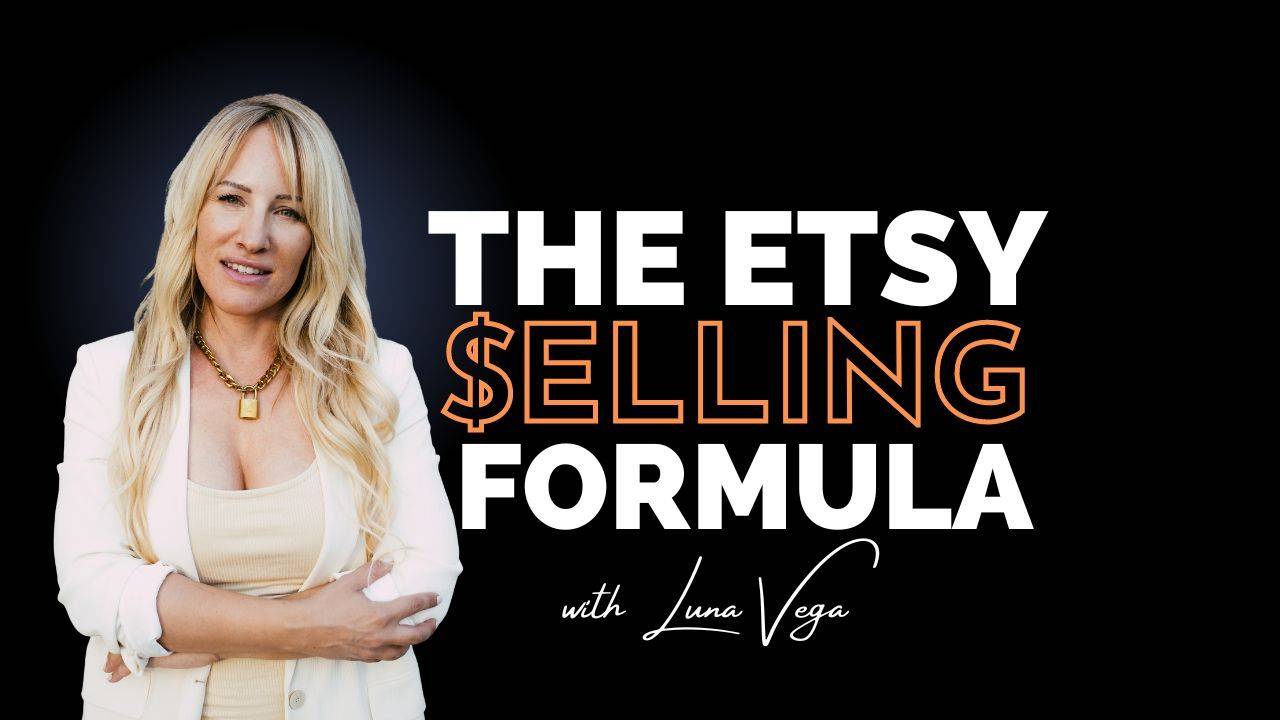 The Etsy Selling Formula
What it teaches
How to create digital products
How to sell on Etsy
How to use Canva and AI
Why it is useful
Focused on beginners
Step-by-step structure
Based on a real platform (Etsy)
What makes it different
Does not push complex systems
Focuses on simple products
Verdict
This is one of the most relevant courses for someone who wants to start with digital products.
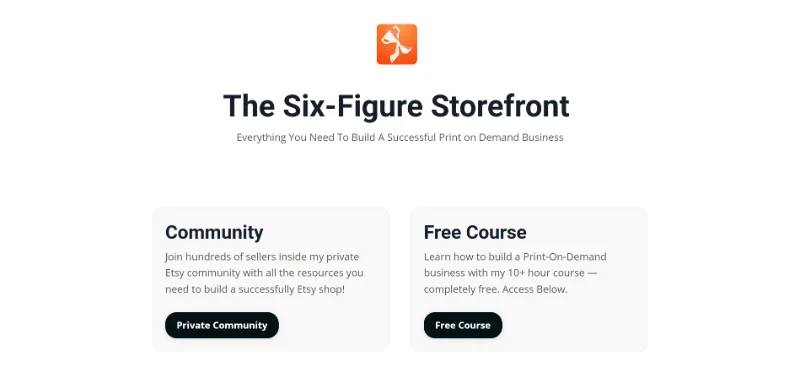
2. Alek Sheffield –  The Six-figure Storefront
What it teaches
Etsy selling
Print-on-demand
Digital product creation
AI tools
Why it is useful
Clear roadmap
Community support
Focus on scalable products
What to keep in mind
Monthly subscription
Requires consistency
Verdict
A good option if you want both:
Digital products
And store-based selling
Courses That Are NOT Ideal for Beginners
These courses were mentioned in the research, but they are not built for someone starting simple.
3. Nathan Nazareth – AI Ecom Programs
Focus
Dropshipping
Ecommerce automation
Problem
Not focused on digital products
Heavy use of “AI automation” marketing
Reality
More complex than it looks
Expensive programs
Verdict
Not recommended if your goal is simple digital products.
4. Sean Dollwet – Self Publishing Programs
Focus
Amazon KDP
Publishing books
Problem
Requires time and research
Not beginner simple
Reality
Not fully passive
Needs consistency
Verdict
Useful for publishing, but not a simple digital product model.
5. Brian Moran – CreatorU / SamCart
Focus
Launching digital products
Funnels and selling systems
Problem
More focused on marketing
Not beginner-friendly without audience
Verdict
Better for people who already have:
Audience
Experience
6. Tanner Chidester – Elite CEOs
Focus
High-ticket coaching
Scaling businesses
Problem
Very expensive
Not beginner-level
Reality
Focus is on coaching, not simple products
Verdict
Not suitable for beginners looking for simple income.
7. Richard Yu – Impact Clients
Focus
Affiliate marketing
Digital product funnels
Problem
Very high cost
Mixed reviews
Complex systems
Reality
Not beginner-friendly
Risky investment
Verdict
High risk and not recommended for beginners.
8. Jason Lee – YouTube Creator Academy
Focus
YouTube monetization
Problem
Not related to digital products
Verdict
Not relevant for this model.
9. Kamil Sattar – Ecom Bootcamp
Focus
Dropshipping
Problem
Not digital products
Verdict
Not relevant.
Final Takeaway
After reviewing all courses:
What works best:
Simple digital product systems
Etsy-based models
Low-cost tools
What to avoid:
High-ticket coaching
Overcomplicated systems
“AI automation” hype
Overhyped vs Underrated Digital Product Ideas
After reviewing all the creators and their strategies, one thing becomes clear: Not all digital product ideas are worth your time.
Some ideas are:
Overused
Too competitive
Or no longer working like before
While others still have strong potential if done correctly.
Key Insight
Most beginners fail because they choose the wrong product, not because digital products don’t work.
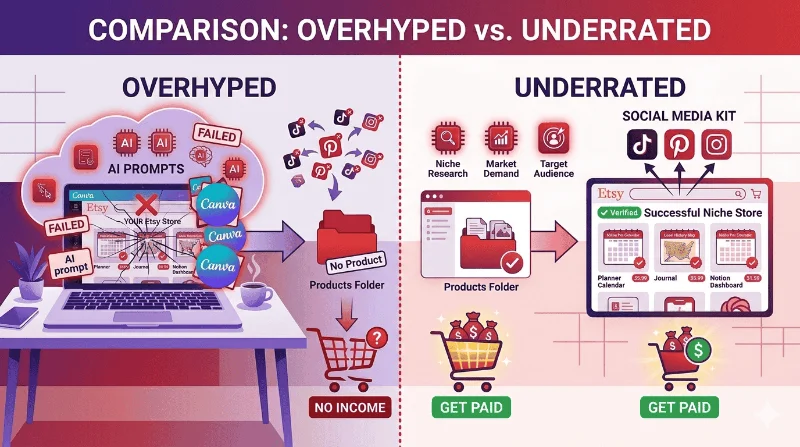
Overhyped Digital Product Ideas
These ideas are commonly promoted but are harder to succeed with today.
1. Generic PLR Products
What it is
PLR (Private Label Rights) products are pre-made content you can resell.
Why it is overhyped
Same product sold by many people
No uniqueness
Low value
Reality
Hard to stand out
Low conversion rates
Verdict
Avoid unless you heavily customize it.
2. General Templates (No Niche)
What it is
Templates made for “everyone”
Examples:
“Social media templates”
“Business templates”
Why it is overhyped
Too much competition
No clear audience
Reality
Hard to rank on Etsy
Low sales without niche
Better approach
Turn it into:
“Instagram templates for fitness coaches”
“Real estate marketing templates”
3. “Passive Income” AI Products
What it is
Products created quickly using AI and sold as “easy money”
Mentioned by
Why it is overhyped
Market is getting crowded
Many low-quality products
Reality
Requires real value
Not instant income
Verdict
AI helps, but it is not a shortcut.
4. High-Ticket Course Selling (For Beginners)
What it is
Selling expensive courses without experience
Mentioned by
Why it is overhyped
Requires audience
Needs trust
Reality
Very hard for beginners
Verdict
Not a good starting point.
Underrated Digital Product Opportunities (High Potential)
These ideas still work well if done properly.
1. Niche-Specific Templates
What it is
Templates made for a very specific audience
Examples:
“ADHD Daily Planner”
“Freelancer Invoice Template”
Why it works
Less competition
Higher demand
How you can make money
Solve one clear problem
Target one audience
2. Problem-Based Digital Products
What it is
Products designed to solve one exact problem
Examples:
“Client Tracking Sheet for Freelancers”
“Etsy SEO Keyword Planner”
Why it works
Clear value
Easy to sell
Key idea
People don’t buy products.
They buy solutions.
3. AI + Practical Use Products
What it is
AI tools combined with real use cases
Examples:
Prompt packs for:
Content creators
Why it works
High demand
Still growing
Important
Focus on:
Results
Not just prompts
4. Simple Bundles
What it is
Combining multiple small products into one offer
Examples:
Planner + tracker + templates
Canva bundle packs
Why it works
Higher perceived value
Better pricing
How to Start Selling Digital Products (Step-by-Step)
After everything we analyzed, the biggest mistake beginners make is this. They overcomplicate the process. You do NOT need:
10 tools
A big audience
A perfect product
You only need a simple system.
Step 1: Pick One Niche
What to do
Choose a specific group of people.
Examples:
Students
Freelancers
Small business owners
Fitness beginners
Why it matters
Easier to sell
Less competition
Clear messaging
Tip
Do NOT target “everyone”
Step 2: Choose One Problem
What to do
Find one problem your audience has.
Examples:
“I can’t stay organized”
“I don’t know how to plan content”
“I struggle to track my clients”
Why it matters
People don’t buy products.
They buy solutions.
Step 3: Create a Simple Product
What to do
Create something basic using:
Examples:
Planner
Template
Tracker
Prompt pack
Important
Start simple. Your first product does NOT need to be perfect.
Step 4: Choose Where to Sell
Best options (from research)
What to do
Upload your product
Add title, description, keywords
Step 5: Use Keywords (Very Important)
What to do
Use words people are searching for.
Example:
Instead of:
“Planner”
Use:
“Daily Planner for Students”
Why it matters
This is how people find your product.
Step 6: Launch and Test
What to do
Publish your product
Let it run
Track results
Important
Do not expect instant results. Give it time.
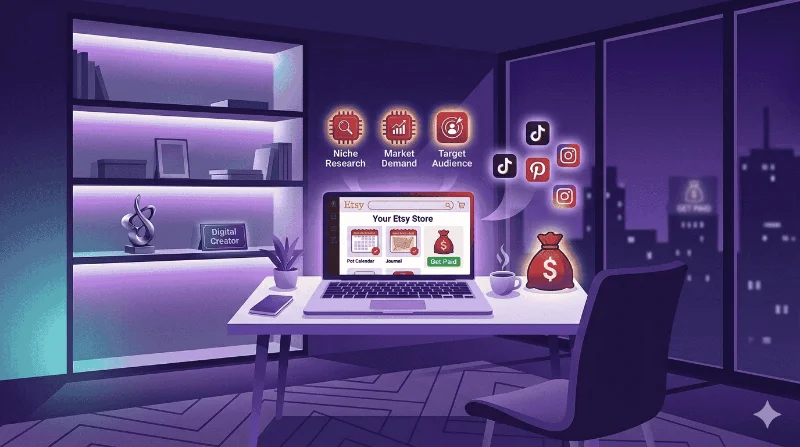
Common Mistakes to Avoid
Trying too many ideas
Buying expensive courses early
Using too many tools
Waiting for “perfect product”
Final Takeaway
You don’t need a complex system to make money online. You need one simple product that solves one real problem.
Final Insight: Where the Real Opportunity Is
After analyzing all the creators, products, tools, and courses, one thing becomes very clear. The opportunity is not where most people are looking.
What Most People Are Doing
Most beginners:
Follow trending ideas
Copy what creators are doing
Jump between different models
Chase fast money
At the same time, many creators:
Promote multiple income streams
Push high-ticket programs
Add unnecessary complexity
What Actually Works
The people who succeed are doing something much simpler:
They focus on one niche
They solve one clear problem
They build one useful product
They improve it over time
If you look deeper into how people are building income today, especially with AI, you’ll notice a pattern. Many are combining simple digital products with systems explained in our guide on AI Automation Business Models.
The Real Gap in the Market
From the research, this gap is very clear:
People want simple ways to make money
But most content is complex and confusing
This is why simple strategies like those explained in AI Side Hustles in 2026 are gaining more attention. They focus on clarity instead of complexity.
What You Should Focus On
If your goal is freedom and online income. Focus on:
Simple products
Clear problems
Niche audiences
Consistent improvement
You can also strengthen your approach by learning how beginners are getting clients and building income streams using AI Freelancing for Beginners.
What You Should Avoid
Avoid:
High-ticket coaching at the start
Overcomplicated systems
Trying to copy every creator
Chasing trends without strategy
Many tools can help, but using them without direction creates confusion. If you’re unsure where to start, explore AI Tools to make money to understand which tools actually support your workflow.
The Truth About Digital Products
Digital products are not easy money.
But they are:
Low cost
Scalable
Flexible
Freedom-based
Simple Winning Formula
If you remember only one thing, remember this:
Pick a niche
Solve a problem
Create a simple product
Sell it on the right platform
Improve over time
If you want a bigger picture of how all of this fits together, you can explore our full guide on How to Make Money With AI in 2026, where we break down the entire ecosystem step by step.
Final Thought
You don’t need more ideas. You need a better approach. The creators making money are not using secret strategies. They are using simple ideas in a smarter way.
What This Means for You
If you start today with the right mindset:
You can build income
You can build skills
You can build freedom
But only if you stay focused and avoid the noise.